A plain-language guide to physical therapy, hands-on techniques, and the questions worth asking.
Learn the basics, then talk with Lori about what fits your needs.
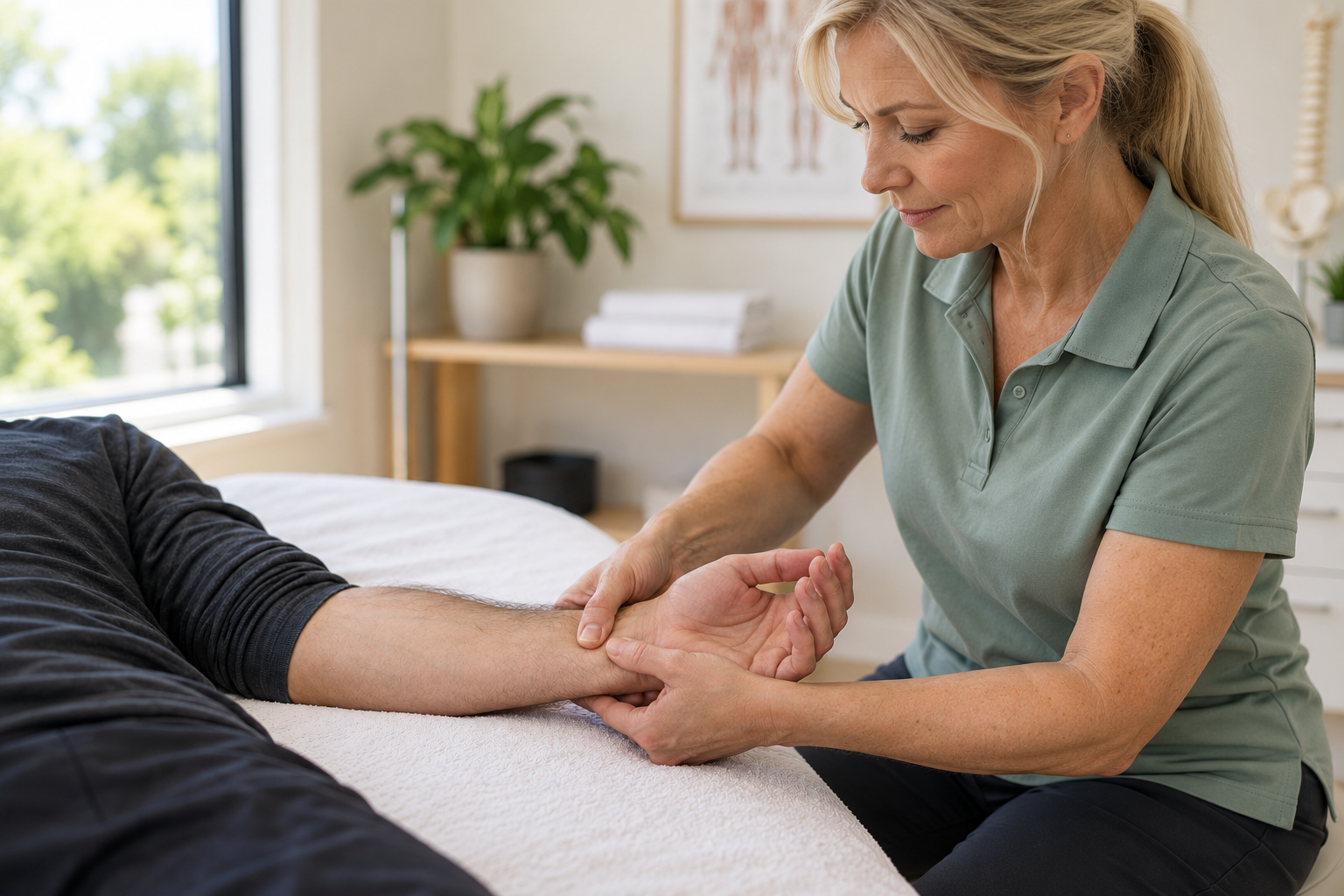
Illustrative treatment image
Physical therapy
Understanding how you move.
Physical therapy combines assessment, education, hands-on care, and targeted movement. The aim is to support function and help you work toward the activities that matter to you.
What to expect
Your evaluation connects your symptoms, health history, movement, and goals. A plan can change as your needs and response to care change.
Soft tissue work
Care for muscles and surrounding tissue.
Soft tissue work is an umbrella term for hands-on techniques applied to muscles and surrounding connective tissue. Myofascial release is one approach that focuses on fascia, the tissue surrounding structures in the body.
What to expect
You may feel gentle pressure or a light stretch. Tell your therapist how it feels. Your health history and examination help determine whether a technique is appropriate.
Joint mobilization
Guided movement for a joint.
Joint mobilization uses skilled, therapist-applied movement to address joint stiffness, restricted motion, or pain. The technique and amount of movement depend on the examination.
What to expect
Your therapist supports and moves the area while you stay relaxed. Mobilization is different from doing an exercise yourself; the goal is to help make useful movement easier.
Dry needling
One tool within a wider plan.
Dry needling uses a thin needle inserted into muscle without injecting medication. Some physical therapists use it to address pain and movement limitations, often as part of a broader treatment plan.
What to expect
Ask about the therapist’s specific training, why it is being recommended, possible risks and side effects, and alternatives. Whether it belongs in your plan depends on your assessment and preferences.
Putting it together
Hands-on care. Active participation.
Physical therapy can include both hands-on treatment and prescribed movement. Understanding your plan helps you take an active role in your care.
Questions to bring to your visit
What did you find in my assessment?
Why do you recommend this technique for me?
What benefits, risks, and alternatives should I understand?
These resources provide general education, not a diagnosis or an individual treatment plan. Techniques are selected after assessment; results vary. Ask Lori about suitability and current availability.
Your next step
Let’s get you back to life.
Start with a conversation about your needs and goals.